Makeup for Headshots & Photoshoots: A London MUA's Guide to Looking Camera-Ready
Professional makeup for headshots and photoshoots across London. How camera-ready makeup differs, from HD bases to boudoir, by an experienced mobile MUA.
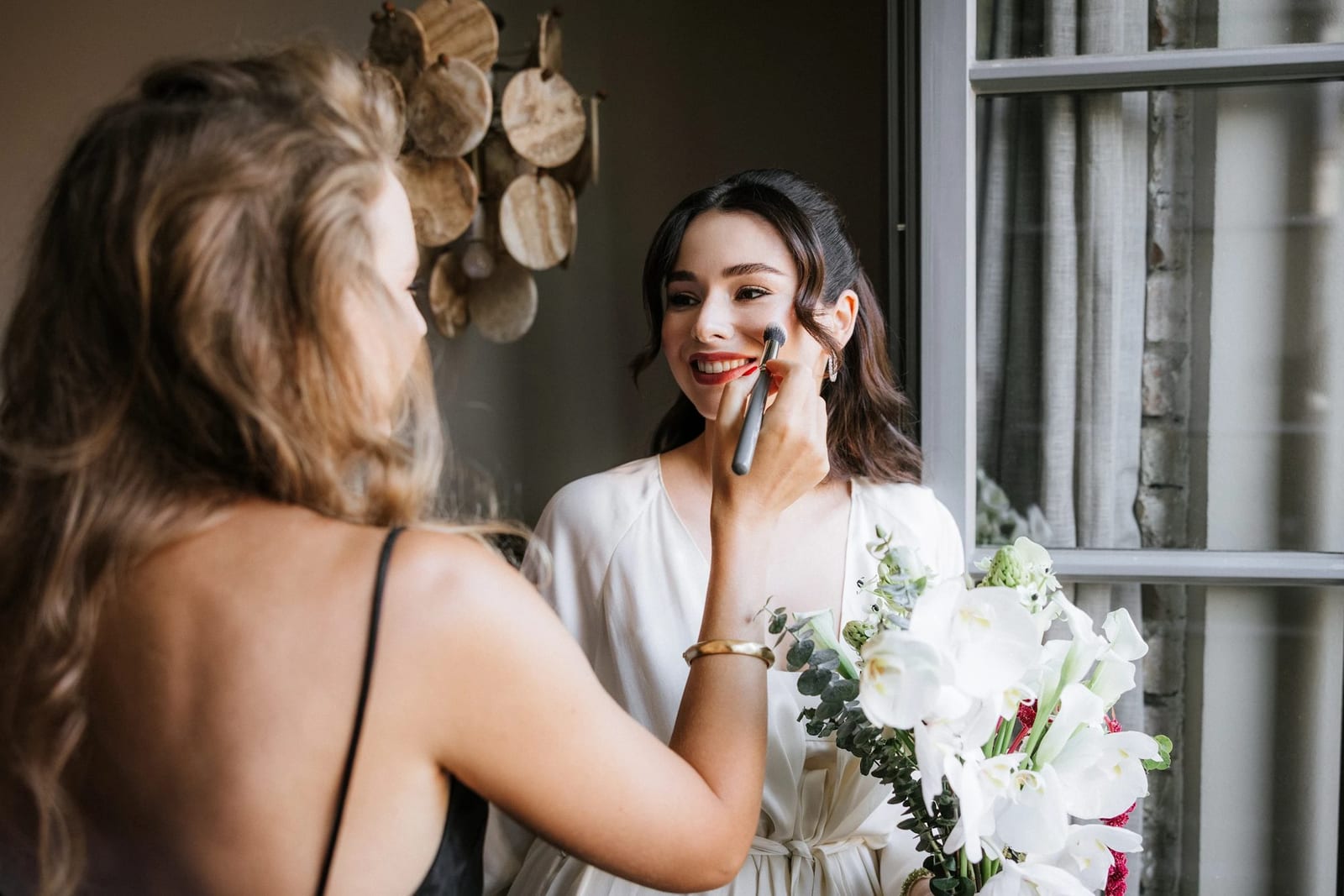
The camera is honest in a way the mirror never is. It picks up the faint shine on a forehead under studio lights, the powder that looked invisible in your bathroom, the blush that reads beautifully in person but disappears entirely once the shutter clicks. Over years of working on shoots across London, I have learned that makeup for the lens is its own discipline — closer to a craft than a look. When I do makeup for a headshot or a photoshoot, I am not simply making someone pretty; I am building a face that will survive high resolution, hold up over hours, and communicate exactly what the images are meant to say. This guide is everything I wish more people knew before they booked a shoot.
Why makeup for the camera is genuinely different
Everyday makeup is designed to be seen by human eyes at a normal, forgiving distance. Camera makeup is designed to be interrogated by a sensor that can resolve individual pores and by lighting that is often far more intense than anything you meet in daily life. Those are two different problems, and they call for two different approaches.
The most common mistake I see is makeup that was applied for the mirror being photographed under studio conditions — and falling apart. Colour that looked balanced turns flat under key lighting. A base that felt natural at arm’s length shows every texture up close. This is why I treat a shoot as a technical brief first and an aesthetic one second. Understanding how light, product and skin interact on camera is the foundation of the whole job, and it draws on the same principles of colour theory that underpin all serious makeup techniques. Get the science right and the beauty follows almost on its own.
The flashback problem, and how I avoid it
If you have ever seen a photo where someone’s face looks noticeably paler or ashy than their neck, you have seen flashback — the ghostly effect caused by light-reflecting particles in certain products bouncing a camera flash straight back at the lens. The usual culprits are foundations, powders and primers containing SPF or certain light-diffusing ingredients. In real life they are invisible. Under a flash or strong strobe, they betray you.
For any shoot where flash or powerful lighting is involved, I deliberately build the base from HD-friendly, flashback-safe products and I test them the way they will actually be lit rather than trusting how they look in the room. I keep the complexion luminous but controlled, matching the face precisely to the neck and chest so there is no visible seam. It is unglamorous, meticulous work, but it is the difference between images you love and images where something looks subtly, distractingly wrong.
Controlling shine without going flat
Skin has to read as skin. The trap on camera is that oil and sweat photograph as bright hotspots, especially across the forehead, nose and chin, yet if you simply powder everything into submission you end up with a face that looks like matte cardboard — lifeless and ageing.
My approach is selective. I mattify strictly where light pools and pools badly, then I leave a deliberate, natural sheen across the tops of the cheekbones and the centre of the face so the skin still looks alive and dimensional. Photographers love a bit of controlled glow because it gives them something to light. Throughout a long session I carry out quiet touch-ups between setups, blotting rather than re-caking, so the skin never builds up into that heavy, powdery finish that creeps in over hours on set.
Defining features so they read on camera
Here is the paradox of camera makeup: the lens flattens. A face that is perfectly defined in person can look washed-out and featureless in a photograph, because the two-dimensional image loses the natural shadows and highlights your eyes read automatically. So the work is to restore that dimension — carefully, invisibly — without tipping into makeup that looks obviously heavy.
That means brows shaped and filled so they frame the eyes with intention, a base of definition around the eyes so they don’t vanish, lashes that open the gaze, and sculpting placed where the bone structure actually is rather than where a trend says it should be. Modern contouring, applied with a light hand, has a genuine history and logic to it — you can read more about how contouring evolved if the subject interests you. On camera my rule is consistent: every feature should be defined enough to survive the flattening of the lens, and no more. The result should look like a very good version of you, not like you are wearing “a lot of makeup.”
Longevity: makeup that lasts the whole shoot
Shoots run long. A personal-branding session might involve several outfit changes over three or four hours; an editorial or portfolio day can stretch far longer under hot lights. Everyday makeup is simply not engineered for that, which is why longevity is one of the core reasons professionals book a makeup artist for a photoshoot rather than doing it themselves.
I build for endurance from the first step: considered skin prep, the right primer for that person’s skin type, thin buildable layers instead of one thick coat, and strategic setting so the makeup is locked without being suffocated. I also stay on set, or nearby, so I can maintain the look between setups — freshening the lips before a hero shot, calming shine before a close-up, adjusting as the light changes. That maintenance is a real part of the service and a real part of why the final gallery looks consistent from the first frame to the last.
Corporate, personal-branding, editorial and boudoir: not the same job
“Photoshoot makeup” sounds like one thing. In practice the brief changes enormously depending on what the images are for, and reading that correctly is half of doing it well.
A corporate or LinkedIn headshot wants to look like you on a very good day — polished, credible, approachable, nothing that dates or distracts. The makeup is refined and quiet; it should never be the thing anyone notices. A personal-branding shoot — for founders, coaches, creatives, anyone building a public presence — has more room for personality and colour, because those images work across a website, social media and press, and they are allowed to feel more like you and less like a corporate template.
An editorial or portfolio shoot is a different world again. Here the makeup can be a creative lead in its own right, and I love this end of the work; it is where I can be more expressive and conceptual, closely tied to the kind of editorial makeup that pushes an idea rather than simply flattering a face. Actor and model portfolios sit in between: agents and casting directors want to see the real, castable face, so the makeup has to be immaculate yet almost undetectable, showing skin and structure honestly. And a boudoir session calls for something soft, warm and intimate — long-wearing and smudge-resistant, flattering in close-up and in lower, moodier light, designed to make the subject feel confident and beautiful rather than “done up.” Knowing which of these five you are walking into shapes every product choice I make.
Working with the photographer and the brief
The best shoot images come out of collaboration, not three people working in parallel and hoping it aligns. Whenever I can, I like to understand the brief before the day: the mood, the lighting setup, whether it is natural window light or hard studio strobes, the wardrobe palette, and how the pictures will ultimately be used. Every one of those details changes what I do on the face.
Lighting in particular dictates a great deal. Soft, natural light is forgiving and lets me keep the skin dewier; hard, directional studio lighting is unforgiving and asks for more precise mattifying and sculpting so shadows fall flatteringly. Wardrobe colour matters too, because the makeup has to sit in harmony with what you are wearing rather than fight it. When I work regularly with photographers on commercial and branded shoots, that shared shorthand makes everything faster and better on the day — and if you already have a photographer, I am always glad to speak with them beforehand so we arrive genuinely on the same page.
Skin prep: where camera-ready makeup really begins
Everything you see in a great shoot image starts with skin, because the camera reads texture more honestly than anything else. The single most useful thing you can do happens before I even arrive: hydrated, well-looked-after skin photographs beautifully and holds makeup for hours, whereas dry or congested skin fights it the whole day.
In the week before a shoot I gently encourage clients to keep to their normal routine and stay well hydrated, to avoid introducing brand-new products or aggressive treatments that might leave skin reactive, and — for anyone considering it — to book any facials well in advance rather than the day before. On the day itself I spend real time on prep: cleansing, hydrating, and choosing the right primer for that person’s skin so the base has something perfect to sit on. If you would like to see the range of work this preparation makes possible, my portfolio gives a sense of the finishes I create across very different briefs.
What to expect on the day
If you have never had makeup done for a shoot before, a little of what to expect goes a long way toward a relaxed, enjoyable session.
I usually arrive an hour or so before the camera is due to roll, sometimes more for a more elaborate look, and I bring everything — I work mobile across London, so you can be prepared in the comfort of your home, a studio or a location. We talk through the brief and any reference images first, then I prep the skin properly and build the look in unhurried layers. I photograph the makeup on my own phone as we go, because a face that looks right to the eye and a face that looks right on a sensor are not always the same thing, and that quick check lets me refine before the real shoot begins. Then, ideally, I stay to maintain the look between setups so it holds from the first frame to the last. My aim is simple: for you to feel completely at ease and completely yourself, so that ease shows in every image.
Let’s plan your shoot
Whether it is a single crisp corporate headshot, a full personal-branding day, an editorial or portfolio session, or an intimate boudoir shoot, camera-ready makeup rewards planning — and it starts with a proper conversation about the brief, the lighting and the look you are after. Cost naturally varies with the length and complexity of the shoot, whether I stay for maintenance, and how many looks are involved, so rather than a one-size figure I always give a personalised quote once I understand what your shoot actually needs.
All of my work is by appointment, which lets me give each shoot the preparation it deserves. If you have a shoot coming up in London, do get in touch with the date, the type of session and a few words about the images you want to create, and I will help you arrive on set looking — and feeling — exactly right.