Famous Makeup Artists Who Shaped Modern Beauty
A working London MUA profiles the famous makeup artists who shaped modern beauty, from Hollywood's Max Factor to the British makeup artists Pat McGrath and Charlotte Tilbury.
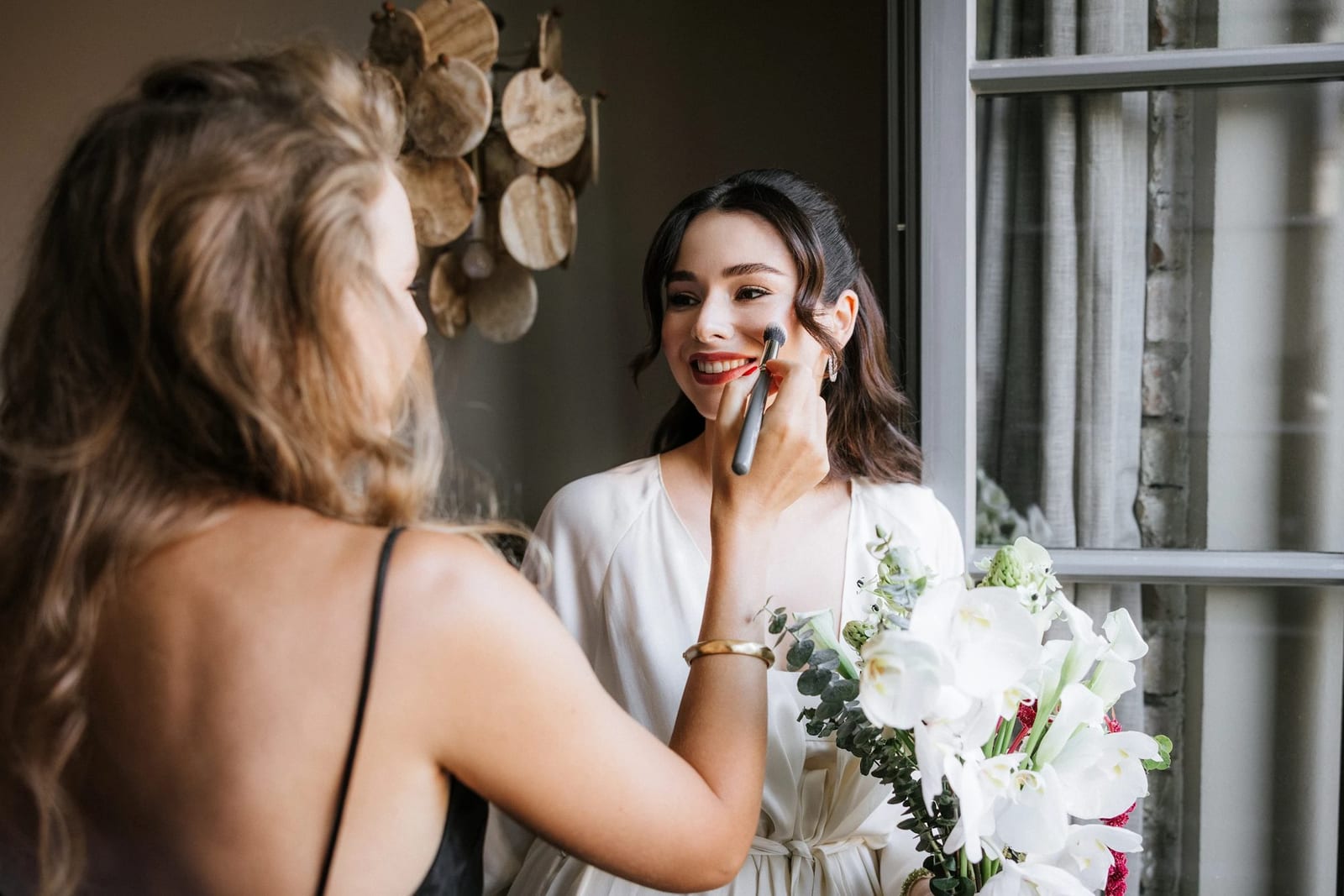
Every time I unzip my kit on a Saturday morning, laying out foundations and brushes on a bride’s dressing table in Kensington or a photographer’s studio in Shoreditch, I’m using techniques and tools invented by a handful of extraordinary people. Most clients have never heard their names. Yet the way I match a skin tone, sculpt a cheekbone, or choose a wearable nude lip all trace back to a lineage of famous makeup artists who turned face-painting into a genuine profession. Some were chemists, some were showmen, some were pure artists. Several of the most influential are British, working within a few miles of where I do. This is the story of the people who shaped modern makeup, told by someone who stands on their shoulders every working day.
Max Factor: The Man Who Invented “Make-Up”
Before Max Factor, the word we use didn’t even exist in its modern sense. A Polish-born wigmaker and cosmetician who emigrated to America, Factor arrived in early Hollywood at exactly the right moment. Silent-film actors were painting their faces with theatrical greasepaint that cracked, caught the harsh studio lighting badly, and looked ghoulish on the new panchromatic film stock.
Factor solved it. In 1914 he developed a thinner, flexible greasepaint that moved with the face, and he is widely credited with popularising the term “make-up” as a noun for cosmetics, taken from the idea of “making up” the face. His 1937 invention, Pan-Cake, was a solid, water-applied foundation created for Technicolor that photographed evenly and covered flawlessly. Actresses started smuggling it home because it looked so good in daylight too, and a professional film product became the first modern mass-market foundation.
Nearly everything in my kit descends from this work: the concept of colour-matched foundation, the understanding that makeup must behave differently under different light, the entire discipline of makeup for the camera. When I take a commercial makeup booking and adjust for the lighting on set, I’m working a problem Max Factor defined a century ago.
Helena Rubinstein and Elizabeth Arden: The Rival Empresses
If Factor built makeup for the screen, two fierce competitors built it for ordinary women, and in doing so invented the modern beauty industry. Helena Rubinstein and Elizabeth Arden loathed each other so completely that neither would say the other’s name; each simply called her rival “the other one.” Their decades-long feud from the 1910s through the 1960s dragged the whole trade upmarket.
Rubinstein, a Polish émigré with a genuine scientific bent, framed skincare and cosmetics around ingredients and “problem-solving,” opening salons in Melbourne, London, and New York and pioneering the idea of different products for different skin types. Arden, a Canadian, was the aesthete: she gave us the elegant salon experience, the red door on Fifth Avenue, and treatments sold as a ritual of self-care. She is often credited with bringing eye makeup to respectable American women and with the first coordinated makeover concept.
What matters for us today is that these two turned cosmetics from something slightly disreputable, associated with the stage and with women of ill repute, into a legitimate, aspirational, everyday purchase. The idea that a woman might have a “beauty routine,” a wardrobe of products chosen for her skin, is largely their invention. You can trace that shift right through the makeup history of the twentieth century.
Kevyn Aucoin: The Artist as Celebrity
For most of the twentieth century, the makeup artist was invisible, an anonymous technician behind the star. Kevyn Aucoin changed that. Working through the 1980s and 1990s, this Louisiana-born artist became famous in his own right, the first true makeup celebrity, beloved of Cindy Crawford, Linda Evangelista, and every supermodel of that golden era.
Aucoin’s gift was transformation. He treated the face like a sculptor treats stone, using light and shadow to reshape it completely, and his books, particularly Making Faces (1997), taught a generation exactly how he did it. He popularised serious, precise contouring and highlighting for real faces long before social media turned it into a craze, showing that a well-placed shadow could slim a nose or lift a cheekbone. If you want to understand how far this technique goes back, our piece on the history of contouring traces the through-line from stage and screen to Aucoin’s editorial work and beyond.
He was also generous, warm, and openly gay at a time that took real courage. When I demonstrate light and shadow in a makeup lesson, I’m teaching Aucoin’s grammar of the face, even to clients who’ve never heard of him.
Bobbi Brown: The Case for Looking Like Yourself
By the late 1980s, makeup had swung to extremes: heavy, matte, artificial. Bobbi Brown, an American artist working in editorial, felt women wanted the opposite, to look like themselves on a good day. In 1991 she launched a line of ten lipsticks built around natural, flattering brown-based tones that looked like real lips, not fancy dress. It sold out almost immediately.
Brown’s whole philosophy was wearable, natural, skin-first makeup: get the base looking like healthy skin, keep the colours in a human range, and enhance rather than mask. She built a global brand on that idea and, just as importantly, made “natural” a legitimate professional goal rather than a lack of effort.
This is the register most of my clients actually want. When a bride tells me she wants to look like herself “but the best version,” she’s describing Bobbi Brown’s philosophy without knowing it. A great deal of what I do in bridal makeup is Brown’s approach: flawless-but-invisible skin, colour that flatters rather than shouts, makeup that still looks like her in twenty years of photographs.
Pat McGrath: “Mother” of Modern Editorial
Now to the British makeup artists — and there is no bigger name in fashion than Dame Pat McGrath. Born in Northampton and largely self-taught, McGrath learned colour from her mother, mixing shades by hand because there was nothing on the market for darker skin. She became the most influential makeup artist in fashion, so revered that the industry simply calls her “Mother.”
McGrath’s runway and editorial work is pure artistry: glittered eyes, glossy skin that looks wet, gilded lips, faces that stop you dead. She has led beauty for the most important shows on the international calendar for decades. In 2015 she launched Pat McGrath Labs, which grew into one of the most valuable makeup brands in the world, and in 2021 she was made a Dame, the first makeup artist ever to receive the honour.
For a British artist like me, McGrath is proof of how far this craft can travel. Her editorial fearlessness, the permission to treat a face as a canvas rather than a problem to be corrected, feeds directly into the editorial makeup I create for photographers and designers. She showed that makeup could be high art and a serious business at once.
Charlotte Tilbury: Red Carpet to Retail Empire
If McGrath is the artist’s artist, Charlotte Tilbury is the great populariser. British, trained under the legendary Mary Greenwell, Tilbury spent years as a red-carpet and editorial artist to the famous before doing something clever: she bottled her signature looks so any woman could recreate them at home.
Her brand, launched in 2013, is built on named, foolproof looks, the “Pillow Talk” universe, the flattering contour palettes, the glowing complexion products, all packaged in that instantly recognisable rose-gold. Tilbury’s genius was to translate professional technique into products an ordinary person could actually use, with the confidence of an artist who has done thousands of faces. She built one of the fastest-growing beauty brands Britain has ever produced.
What I take from Tilbury is the value of a flattering, glamorous, universally becoming look, and the honesty that most people want to feel gorgeous rather than avant-garde. For special occasions makeup, a fortieth birthday, an anniversary, a gala, that polished red-carpet glow is very often exactly the brief.
Lisa Eldridge: The Beauty Historian
Lisa Eldridge is the British artist who taught the internet how to do makeup. One of the most respected artists in the industry, creative director for major houses and makeup artist to a long list of famous faces, she is also, quietly, one of its finest teachers and historians.
Her calm, generous online tutorials demystified professional technique for millions, and her book Face Paint: The Story of Makeup (2015) is a genuinely serious history of cosmetics from ancient times to today, drawing on her own collection of antique makeup. Eldridge understands that to do makeup well, it helps to know where every gesture came from, why we redden lips, why we darken eyes, what each era believed beauty to be.
That belief shapes how I write and teach. Understanding the Victorian ideals of pale restraint, or the bold experimentation of later decades, isn’t academic; it tells you why a look reads as it does. Eldridge’s example is a large part of why this beauty journal exists at all.
Val Garland: British Avant-Garde on the Runway
Rounding out the British contingent is Val Garland, a Bristol-born artist whose work sits at the wildest, most creative end of the profession. Global director of makeup artistry for a major cosmetics house and a fixture on the international fashion weeks, Garland is known for fearless, boundary-pushing runway looks, and to a wider audience as a sharp, warm judge on the BBC’s Glow Up, mentoring the next generation of British artists.
Garland’s work is a reminder that makeup is not only about flattering and correcting; it can be sculpture, provocation, and pure imagination. Graphic liner, unexpected colour, texture used like a painter uses impasto, her runway faces expand what the rest of us think is possible, and those ideas trickle down into what feels wearable a season or two later.
Even in commercial work, that spirit matters. Knowing the outer limits of makeup techniques makes me braver and more precise within them. Garland gives every British artist permission to treat the face as a place for genuine creativity.
The Lineage in Every Kit
Line them up and you see the whole craft: Max Factor made makeup for the camera and gave it its name; Rubinstein and Arden made it a respectable everyday industry; Aucoin made the artist a star and taught us to sculpt with light; Bobbi Brown made “natural” a professional goal; and the British generation, McGrath, Tilbury, Eldridge, and Garland, carried it into art, retail, education, and the runway. Not a single one of them worked in isolation; each answered the one before.
I find it genuinely moving that when I sit a client down and begin, I’m holding all of this in my hands, a century of invention distilled into a few brushes and a steady wrist. It’s why I care about doing it properly, and why I keep learning.
If reading this has made you curious about the craft, I’d love to share it with you, whether that’s a polished editorial makeup look for a shoot or a hands-on makeup lesson where I teach you the techniques these artists invented. Makeup with me is by appointment, so do get in touch and tell me what you have in mind.