Wedding Guest Makeup: How to Get It Right — and Make It Last All Day
A makeup artist's guide to wedding guest makeup — the unwritten etiquette, how to build a look that lasts from ceremony to dance floor, and when it's worth booking a professional.

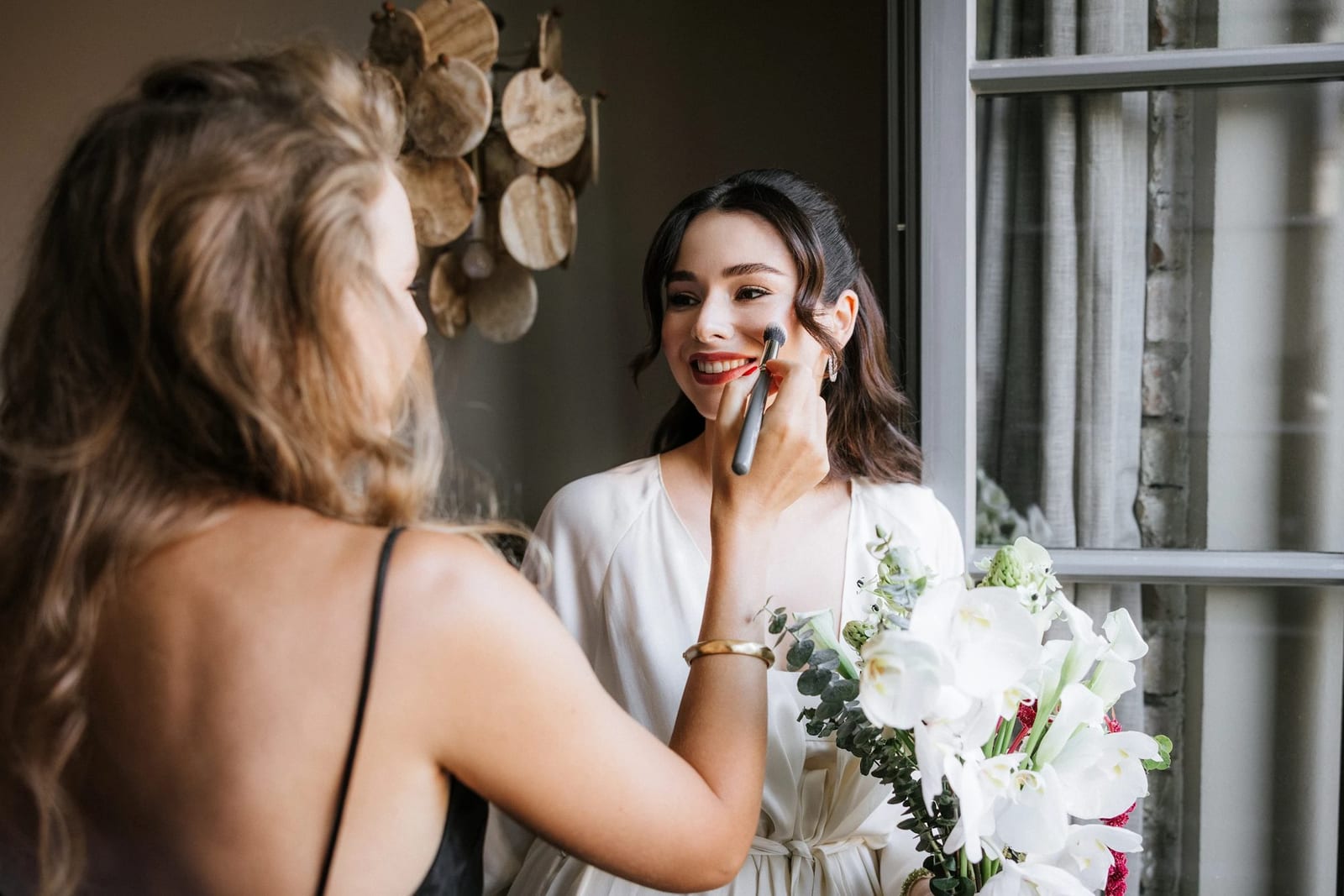
Wedding guest makeup is its own discipline, and it’s harder than it looks. You need to survive a twelve-hour day that starts in a church and ends on a dance floor, look polished in dozens of photographs you didn’t pose for, possibly cry a little, and do it all without drifting anywhere near the one rule everybody knows: it is not your day. As a London makeup artist I spend half my summer painting wedding parties — brides, mothers and guests alike — and this is the advice I give every guest who sits in my chair.
The unwritten etiquette
Let’s deal with the rules first, because they’re simpler than the internet makes them:
Don’t compete with the bride. That’s really the only law. In practice it means skipping anything that reads as bridal — no full glam with lashes, glow and nude lip if you know the bride is having exactly that, and nothing so theatrical that it pulls eyes in the group photographs. Elegant, finished, and one notch below centre stage is the register.
Match the formality, not the trend. A black-tie city wedding can carry a sharper eye and a stronger lip than a barn wedding in the Cotswolds. The invitation tells you the dress code; the dress code tells you the makeup. A look that ignores the room always photographs as exactly that.
Daytime ceremony, evening reception — design for both. Most wedding days run from early afternoon light to candlelight. Build a base that works in honest daylight, then carry one item — usually a lip colour — that turns the look up for the evening. It’s far more reliable than planning a mid-day transformation in a marquee loo.
Building a look that lasts twelve hours
This is where guest makeup is won or lost. The technique is the same one I use on brides, scaled down:
Skin preparation is half the wear time. Moisturiser fully absorbed before primer; primer chosen for your skin type, not the one in the advert. Oily skins need grip and oil control through the T-zone; dry skins need hydration locked in first, or foundation will cling by mid-afternoon.
Thin layers beat one thick one. Two sheer passes of foundation, set with a light dusting of powder only where you actually shine, will outlast a single heavy application every time — and look like skin in photographs rather than a surface.
Cream first, powder over. Cream blush topped with a whisper of powder blush is the oldest long-wear trick in the book, and it works just as well on eyes: a long-wear cream shadow base under powder shadow will hold a look through a heated marquee.
Waterproof where it counts. Weddings make people cry — usually during the speeches, occasionally during the vows. Waterproof mascara and a long-wear liner are non-negotiable; everything else can be blotted, but panda eyes can’t.
Pack a tiny kit. The whole evening repair kit is three items: your lip colour, blotting papers, and a cotton bud. Anything more won’t fit in the clutch anyway.
The looks that always work
If in doubt, these three briefs photograph beautifully at any wedding:
- Polished neutral — luminous base, softly defined eye in browns or taupes, groomed brows, a rosy-nude lip. Invisible effort; flattering on everyone.
- The statement lip — clean minimal eye, perfected skin, and one confident colour (a true red, a deep berry) chosen to suit your colouring and your outfit. Wonderful for black-tie.
- The soft smoke — for evening receptions: a diffused, smudged eye in bronze or charcoal, kept low-key everywhere else. Reads as effortless in candlelight.
Which shades inside those briefs suit you comes down to colouring — undertone, eye colour, the dress — and that’s a science worth two minutes of reading: understanding colour theory in makeup covers it properly.
When it’s worth booking a professional
For most weddings, your own well-practised makeup is exactly right. But there are days when a professional pays for itself: you’re in the photographs all day (mother of the bride or groom, sister, close family), it’s a formal evening wedding, you’re travelling and getting ready in a hotel, or you simply want one morning where someone else does the worrying.
A professional guest booking takes about an hour at your home or hotel, lasts the whole day by design, and — done well — looks like you on your very best morning rather than like makeup. If several of you are getting ready together, it becomes one calm, rather lovely part of the day; I regularly do group occasion bookings where mothers, sisters and friends share the mirror before the cars arrive.
If you’ve a London wedding in the diary and want to be properly done for it, send me the date — I read every enquiry myself.