Evening Makeup: A London Night-Out Guide
Evening makeup that lasts all night: how to build depth, a focal point and a look that photographs beautifully, plus when to book a London professional.
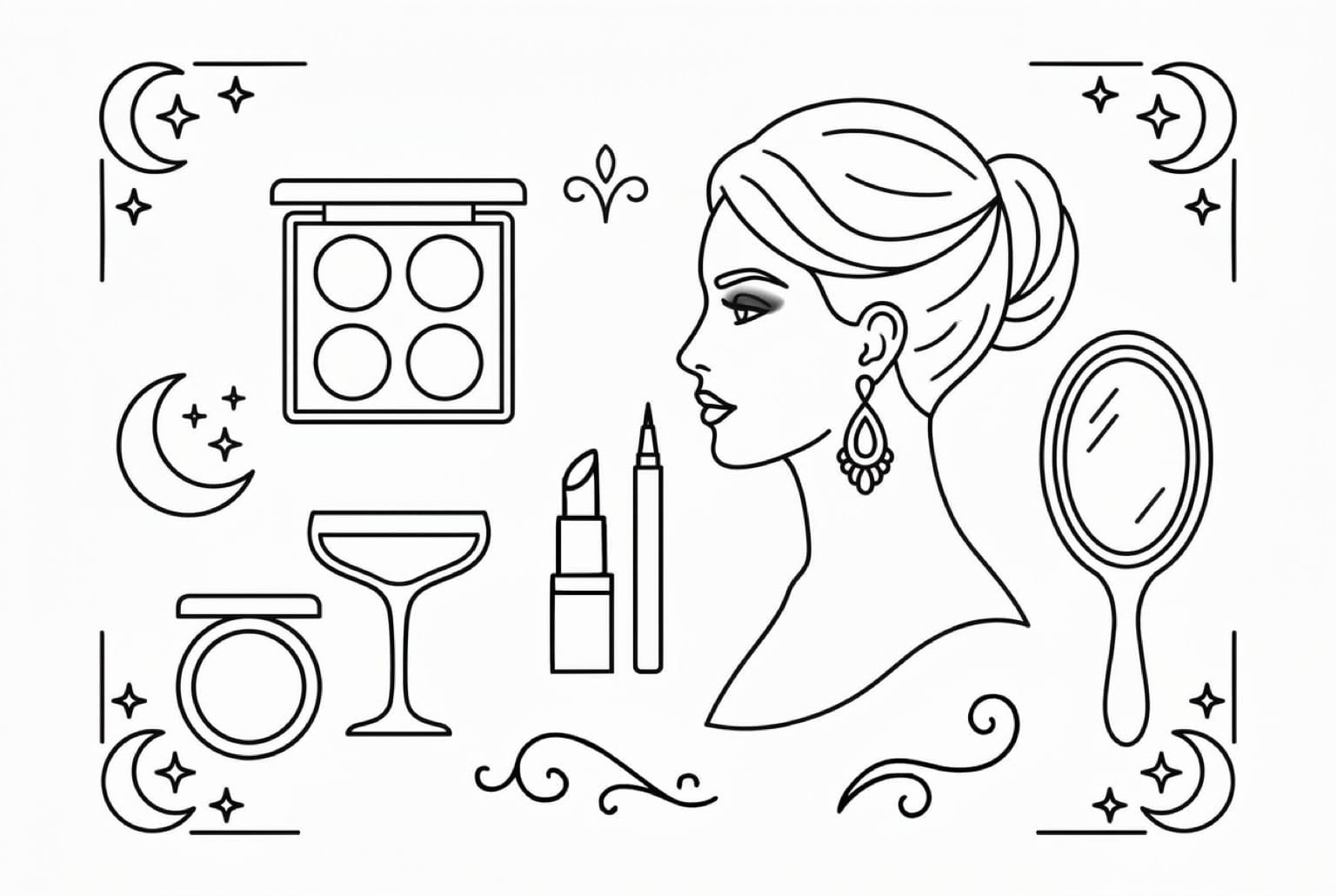
There is a particular kind of magic to getting ready for an evening out. The daylight fades, the lamps come on, and the makeup you’d wear to the office suddenly looks a little flat. Evening makeup is its own discipline — it plays by different rules, under different light, for a different mood. Whether you’re heading to dinner in Mayfair, a gala at a City livery hall, a milestone birthday in Soho or a first date somewhere candlelit, the look you build for the night needs more depth, more staying power, and a clear focal point that carries across a dimly lit room.
I’ve spent years doing evening and occasion makeup on clients all over central London, and the questions are always the same: why does my daytime look disappear at night, how do I make my eyes stand out, and how do I stop it sliding off by 10pm? This guide answers all of that. I’ll walk you through what actually makes evening makeup different, how to build the two looks that work for almost everyone, how to make it photograph well, and a simple step-by-step you can do yourself at home — before I’m honest with you about when it’s genuinely worth handing the brush to someone else.
What makes evening makeup different from daytime
Daytime makeup is designed to look like you, slightly polished, in natural light. It’s meant to hold up to scrutiny across a lunch table by a window. Evening makeup has an entirely different job. It’s usually seen in low, warm, artificial light — restaurant tungsten, party fairy-lights, the amber wash of a hotel bar — and warm light flattens contrast. Colours mute, shadows soften, and definition that looked strong in your bathroom mirror can read as barely-there by the time you’ve reached the venue.
So evening makeup compensates. It’s built with a little more depth and contrast than you’d wear by day, so that when the light knocks it back, what’s left still reads as intentional and defined. It leans into a single focal point — usually the eyes or the lips, rarely both at full volume — so there’s somewhere for the eye to land. And it’s engineered for longevity, because an evening look has to survive dinner, drinks, conversation, dancing and the odd emotional toast without needing a rescue mission in the loos. Those three ideas — depth, a focal point, and staying power — are the whole game. Everything below is just how you deliver them.
The two looks that work for almost everyone: smoky eye vs soft glam
When a client tells me they want “evening makeup”, they almost always mean one of two things, even if they don’t have the words for it yet. The first is the smoky eye — the classic, sultry, diffused wash of darkness around the eye that never really goes out of fashion. The second is soft glam — a more polished, luminous, red-carpet-adjacent look with a defined but not dramatic eye, glowing skin and a lot of dimension. Neither is more “correct”. They suit different faces, different occasions and different personalities.
A smoky eye doesn’t have to be black and heavy. Some of my favourite evening looks are smoky in bronze, plum, or deep taupe — softer on the eye but still full of depth. The technique is the same whatever the colour: a darker shade pressed into the outer corner and along the lash line, a mid-tone blended through the socket to create a gradient, and a lighter shade to lift the inner corner and brow bone. The secret is diffusion — no hard edges, everything melting into the next.
Soft glam, by contrast, is about luminosity and structure. Think glowing, well-prepped skin, a neutral or softly shimmered eye with precise but understated definition, a lifted lash and sculpted cheekbones. It photographs beautifully and reads as expensive without looking like a lot of effort. If you want to understand how each of these looks is actually constructed — the placement, the blending, the order of operations — my breakdown of core makeup techniques goes deeper into the mechanics than I can here.
Choosing your focal point: the bold lip or the soft-glam mouth
Here’s the rule I come back to most often with clients: let one feature lead. If the eyes are doing the heavy lifting — a proper smoky eye, lashings of definition — then the lip should support, not compete. A soft nude, a “your lips but better” rose, or a sheer berry keeps the balance. Push both the eye and a bright red lip to full drama and you can tip from glamorous into costume very quickly.
But when the eye is kept relatively clean, a bold lip becomes the whole event. A true red, a deep wine, a vampy plum — these are some of the most striking evening looks there are, and they suit London’s dressier occasions perfectly. A red lip against candlelight is timeless for a reason. If you love the idea of a statement mouth, keep the eye soft and neutral, define the lash line, and let the colour carry the look.
The choice between them is really a choice about mood. Smoky eye and soft lip reads sultry and modern. Clean eye and bold lip reads classic, confident, a little Old Hollywood. Neither is wrong — but committing to one is what separates a considered evening look from a busy one.
Base and setting: building a look that lasts all night
A gorgeous eye is worthless if the base beneath it has slid into your smile lines by nine o’clock. For evening, the base is where longevity is won or lost. I always start with proper skin prep — a well-hydrated, thoroughly moisturised face that’s had a few minutes to settle, then a primer suited to the skin type. Dry skins want a hydrating, luminous base; oily and combination skins want a mattifying, grippy primer through the T-zone. Skipping this step is the single most common reason home looks don’t last.
Through the evening, longevity comes down to a few honest principles. Use thin, buildable layers rather than one thick coat — thin layers grip the skin and each other, thick ones crack and travel. Set strategically, not everywhere: a light dusting of powder where you get shine and where products tend to move (under the eyes, around the nose, the centre of the forehead), whilst leaving the high points of the cheeks a little more luminous. And finish with a setting spray, which genuinely fuses powder and cream layers together and buys you hours. A little cream contour and blush placed before powder, so they melt into the skin rather than sitting on top, gives you dimension that lasts — the whole idea of sculpting light and shadow to shape the face has a long and fascinating lineage, which I trace in my piece on the history of contouring if you’re curious how we got here.
How to make evening makeup photograph beautifully
Almost every evening out ends up documented — a birthday, a gala, a party, a date you’ll want to remember. And cameras, especially with flash, are ruthless. They flatten your features, blow out anything reflective, and expose every product decision you made. A little knowledge here goes a long way.
The biggest culprit is SPF and heavy light-reflecting powders in flash photography. Both can bounce the flash straight back and leave you looking pale, ashy or ghostly in photos — the dreaded “white cast”. For a heavily photographed evening event, I’m careful with high-SPF bases and use translucent, finely-milled setting powders sparingly. The second culprit is under-defined features: because flash flattens contrast, the depth and focal point we built earlier are exactly what keep you looking sculpted rather than washed-out on camera. This is why evening makeup and photograph-well makeup are, happily, almost the same thing.
A few more things I do for the camera: I keep shimmer intentional and placed only where I want light to catch (never all over the face, which reads as shine, not glow), I make sure the lip has enough pigment to survive the flash, and I blend, blend, blend — harsh edges that you’d never notice in the room are the first thing a lens finds. If your evening is a big, photographed occasion — a wedding reception, a corporate awards night, a landmark party — these details are worth real attention, and they’re a large part of what I’m quietly managing on any special occasion booking.
How to do your own evening look: a simple walkthrough
If you’re doing it yourself tonight, here’s the order I’d follow. It’s the same skeleton I use professionally, pared down to the essentials.
1. Prep and prime. Cleanse, moisturise, and give it five minutes to sink in. Apply primer suited to your skin. This is not the step to rush.
2. Base. Apply your foundation in thin layers, building only where you need coverage. Conceal under the eyes and around the nose. Keep it light — you can always add more.
3. Sculpt. Cream contour under the cheekbones and along the jaw, cream blush on the apples, a touch of cream bronzer where the sun would naturally warm the face. Blend everything with a sponge or brush so it melts in.
4. Eyes — pick your look. For a smoky eye, press your darkest shade into the outer corner and lash line, blend a mid-tone through the socket, lift the inner corner with something light, and diffuse until there are no hard lines. For soft glam, keep it neutral and luminous with definition kept to the lash line. Either way, tightline the upper lash line and finish with plenty of mascara or a lash.
5. Set. Powder only where you shine or where product moves. Leave the cheekbones glowing.
6. Lip. Choose your focal point. Bold lip if the eye is soft; soft lip if the eye is dramatic. Line it for longevity.
7. Lock it in. A generous mist of setting spray, held at arm’s length, and let it dry without touching. That’s your evening, sealed. If you want the individual products and tools I reach for at each stage, my rundown of my working kit lives over in the makeup products guide.
When it’s genuinely worth booking a professional
I’ll always encourage people to have a go themselves — learning your own face is a joy, and it’s exactly what my makeup lessons are for. But I’d be lying if I said every evening is a DIY evening. There are nights when booking a professional isn’t a luxury so much as good sense.
Book someone when the occasion genuinely matters and you don’t want to spend it worrying: a landmark birthday, a gala, an awards ceremony, an important date, a party you’ve been looking forward to for months. Book when the evening is heavily photographed and you want to look flawless in every shot, because the camera details above are the difference between “lovely” and “how is she glowing”. Book when you simply want to enjoy the evening — to arrive relaxed, on time, and confident, instead of frazzled from an hour hunched over a mirror. And book when you want a look you can’t quite achieve yourself yet, whether that’s a truly precise smoky eye or a lash that stays put through dancing.
London is full of occasions that deserve this. The Christmas party season is its own category — I’ve written a whole guide to festive party makeup — but so are summer galas, gallery openings, theatre nights and the countless celebrations this city throws all year round. A quick look through my portfolio will give you a feel for the range of evening looks I create, from soft and luminous to full, confident glamour.
An evening that looks after itself
Evening makeup, done well, should feel like a small superpower. You walk in knowing your eyes read across the room, your base will still be perfect in the last photo of the night, and you look unmistakably yourself — just turned up. Whether you build it at home with the steps above or hand it to me for a night you’d rather simply enjoy, the principles are the same: depth, a focal point, and staying power.
If you’ve got an evening on the horizon that matters to you, I’d love to help you feel your absolute best for it. Makeup is by appointment, and I work across central London and beyond — so do get in touch to talk through your occasion and secure your slot.