Bridesmaid Makeup: Creating a Cohesive Bridal Party in London
A London wedding MUA on bridesmaid makeup that complements the bride, flatters every face and lasts the whole day. Cohesive looks, timings and logistics.
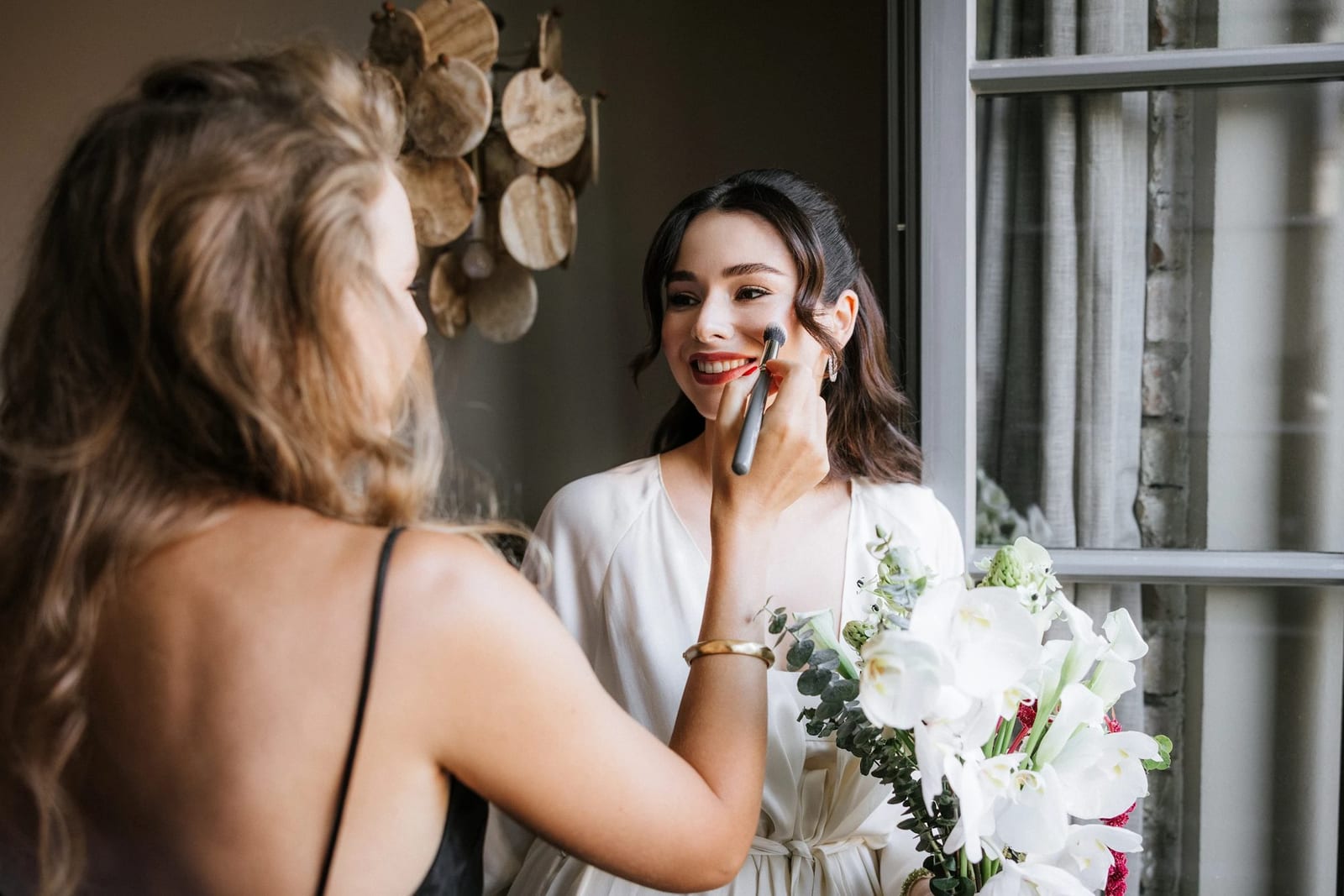
There is a particular moment on a wedding morning that I love. The bride is in her robe, the room smells of coffee and hairspray, and one by one the bridesmaids sit in my chair. Each of them arrives a little differently — one nervous, one already glowing, one convinced she “doesn’t really do makeup” — and my job is to send every one of them back out looking like the best, most rested version of herself, whilst quietly making sure the whole group reads as one considered picture. Bridesmaid makeup is a balancing act: individual enough to flatter very different faces, cohesive enough to look intentional in the photographs, and always a step softer than the bride so she stays the centre of everything.
After years of doing wedding parties across central London, I have learnt that the best bridal-party makeup is invisible as a strategy and obvious only as a result. Nobody at the wedding should be able to say why the bridesmaids look so good together — they should simply feel it. In this piece I want to be genuinely useful and share how I actually think about it: how I build a cohesive look, how I tailor each face, how the morning runs to time, and how bridal-party makeup fits into a wedding booking.
Complementing the bride without competing
The first principle of good bridesmaid makeup is restraint in the right places. The bride sets the tone, and everyone else is styled to sit just beneath her. That does not mean the bridesmaids look plain — it means the most dramatic element of the day, whatever that is, belongs to the bride. If she is wearing a bold red lip, I will keep the party in soft rosy or nude tones. If her look is a smoky, editorial eye, the bridesmaids get a cleaner, more diffused version. There is always one point of emphasis reserved for her.
I usually establish this during the bride’s bridal makeup trial, because once I know exactly where her look is going, I can design the party around it rather than guessing on the morning. Complementing is about hierarchy, not sameness. The bride should be able to stand in the middle of her bridesmaids and read instantly as the bride, even in a candid shot taken from across the room.
The subtler trap is competition through finish. A very high-shine, glassy skin on a bridesmaid can actually pull focus more than a bold lip, because the camera loves it. So I keep the party’s skin beautiful but calm, and let the bride have the standout luminosity if that is her style. Small decisions like this are what separate a group that looks coordinated from one that looks like a row of separate bookings.
Cohesive, not uniform
The phrase I come back to most with clients is cohesive, not uniform. A common worry is that “matching” bridesmaid makeup will make everyone look identical — and it would, if I gave five different women the exact same eyeshadow and the exact same lip. That is a mistake I see in photographs all the time: one look copied and pasted across faces it was never designed for. It ages badly and it rarely flatters more than one or two people in the group.
Cohesion comes from shared language, not identical execution. I choose a palette family — say warm neutrals with a soft bronze eye and a rosy-nude lip — and then I speak that language differently on each face. The finish stays consistent (everyone soft-matte, or everyone with a gentle glow), the intensity sits in the same register, and the overall mood matches. But the specific shade of bronze, the depth of the lip, the shape of the liner all shift to suit the individual. Stand the group together and it looks composed and deliberate. Look at each woman on her own and the makeup looks like it was made for her, because it was.
That balance is the whole craft of bridal-party work, and it is why I treat the group as one brief with several variations rather than several unrelated jobs.
Tailoring each face across the party
A bridal party is almost never one age, one skin tone, or one set of features. In a single morning I might make up the bride’s teenage sister, two friends in their thirties, and the mother of the bride. Treating them identically would flatter almost none of them. Tailoring is where experience earns its place.
Skin tone is the obvious one: undertone, depth and the way different complexions catch light all change how I choose base, blush and eye colours so that a shade reads warm or fresh rather than grey or ashy. But age matters just as much. On more mature skin I work with lighter, more flexible layers, place less powder, and keep textures creamy so nothing settles into fine lines — much the same thinking I bring to makeup for women over 50. On very young skin I keep everything fresh and minimal so it looks age-appropriate rather than heavy.
Features guide the rest. A hooded eye needs its definition placed differently from an open lid; a fuller lip and a finer lip want different applications of the same “party” shade. I also listen. Some bridesmaids love a bit of glamour and some feel most themselves with barely anything on — and part of my job is honouring that whilst keeping them within the shared look. The result is a group where every woman feels like herself, only polished, and no one has been forced into a face that does not suit her.
The wedding-morning running order
Logistics are half of what makes a wedding morning feel calm, and timing is where most of the stress hides. As a rough guide, I allow around 30 to 45 minutes per bridesmaid and a longer slot for the bride, because her look is more detailed and I never want to rush it. For a full party I build a running order backwards from the single most important fixed point of the day: the time you need to be in your dress with photographs beginning.
I usually start with whoever needs to leave the room first — anyone helping with logistics, or a bridesmaid heading off for early photographs — and I place the bride so her makeup finishes close to the end, when her skin is freshest and there is the least chance of anything being disturbed before the dress goes on. Mothers of the bride, flower girls and any additional faces get slotted where they fit best. When hair and makeup are both running, we stagger the two so nobody is ever sitting idle and the room keeps moving.
I share a clear schedule in advance so everyone knows their slot, and I build in a small buffer, because weddings always have one unexpected five minutes — a delayed delivery, a dress that needs steaming, a toast that runs long. A realistic timeline with a little breathing room is what lets the morning feel like part of the celebration rather than a countdown.
Makeup that lasts the whole day
A wedding is one of the longest days makeup ever has to survive — a morning of preparation, an emotional ceremony, hours of photographs, dinner, dancing, and often a warm marquee or a summer garden in between. Longevity for the bridal party is not an afterthought; I plan for it from the base up.
It starts with proper skin preparation and the right primer for each person’s skin type, because a base that is chosen for oily skin will not behave the same way on dry or mature skin. I build in thin, considered layers rather than one heavy coat, set strategically where each face needs it rather than all over, and choose long-wear formulas for the points that take the most punishment — the lips, the inner corners, anywhere tears are likely during vows. I always recommend a lash choice that will hold from morning until the last dance.
For bridesmaids I usually leave a tiny touch-up kit — a lip and a little powder — so the party can refresh themselves through the day without needing me on hand. Makeup that lasts is really about doing the invisible work early so that, twelve hours in, the photographs still look exactly as they did at nine in the morning.
Coordinating with the whole wedding aesthetic
Bridesmaid makeup does not live in isolation. It sits inside a much bigger picture — the dresses, the flowers, the venue, the season, the overall mood the couple has spent months building — and the best bridal-party looks quietly echo all of it. A soft, romantic garden wedding in ivory and blush asks for something different from a black-tie evening reception in a grand London townhouse.
I always want to understand the wider aesthetic before I finalise anything: the colour of the bridesmaids’ dresses, whether the palette is warm or cool, how formal the day is, and the light the photographs will be taken in. Deep jewel-toned dresses can carry a slightly richer lip; pale, airy palettes usually call for something fresher and more diffused. It is the same instinct I bring to any special-occasion makeup — reading the whole event, not just the face — but a wedding has more moving parts to harmonise, which is exactly what makes it satisfying. When the makeup, the flowers and the dresses all belong to the same story, the photographs feel effortless, and effortless is always the hardest thing to plan.
If you would like a sense of how this comes together across real weddings, my portfolio shows brides and their parties styled as complete pictures rather than individual faces.
How bridal-party makeup fits into a wedding booking
Practically, bridal-party makeup is usually booked alongside the bride as part of one wedding reservation rather than as separate appointments. That is deliberate: when I am styling the whole group, I can design the party around the bride’s look, hold the palette together across every face, and manage the morning as a single, well-timed session. Booking the party with the bride is what makes true cohesion possible.
I take an accurate head count early — bride, bridesmaids, mothers, flower girls, anyone who wants to be made up — because the number of faces is the single biggest factor in how the morning is planned and how long it takes. The look you are after and whether hair is running alongside makeup matter too. Everything begins with the bride’s vision, and the bridal makeup service is really the anchor the whole party is built around.
On cost, I never work to a fixed price list, because no two weddings are the same. The number of people, the styles involved, the venue and the timings all shape a wedding booking, so the honest and useful thing is to give you a tailored quote for your particular day rather than a number that might not fit. If you would like to understand the general factors involved before you enquire, I have written more about wedding makeup costs in London — and of course I am always happy to talk it through personally.
Bringing your bridal party together
A beautifully made-up bridal party is one of the quiet luxuries of a wedding day. It is not about everyone looking the same, and it is certainly not about anyone outshining the bride. It is about a group of women who each feel confident and themselves, styled with enough shared language that the photographs look considered and calm — and a morning that runs on time so the day starts with ease rather than nerves. That, to me, is what good bridesmaid makeup really delivers.
If you are planning a London wedding and would like your bridal party looked after with the same care as the bride, I would love to hear about your day. Makeup is strictly by appointment, so do get in touch with your date, your venue and a rough number of faces, and I will help you plan a morning that feels as lovely as it looks.